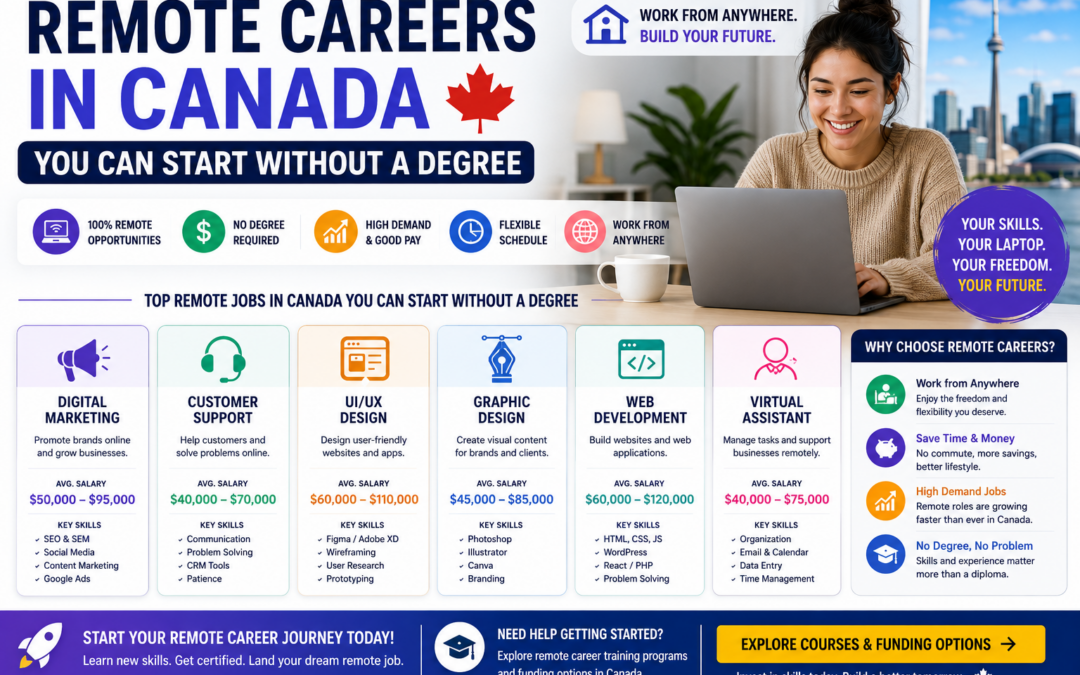
The Canadian job market is changing rapidly, and the idea of skills over degree Canada employers now prioritize is becoming more common across multiple industries. Today, many companies are focusing less on traditional university education and more on practical skills, certifications, portfolios, and real-world experience.
As industries adapt to digital transformation, AI technologies, and labor shortages, employers are increasingly hiring candidates who can perform the job immediately rather than relying only on academic credentials. This shift is creating new opportunities for Canadians pursuing skill based careers Canada companies actively hire for without requiring a traditional degree.
Why Canada’s Job Market Is Changing
Canada’s workforce is evolving because of:
- AI and automation
- Digital transformation
- Skilled labor shortages
- Remote work growth
- Technology-driven industries
- Faster-changing job requirements
According to labor market trends, employers are now prioritizing adaptability, technical skills, and problem-solving abilities over traditional educational backgrounds in many sectors. (jobbank.gc.ca)
You can also explore related career opportunities in this guide from Best Careers Without a Degree in Canada (2026 Guide)
The Rise of Skill-Based Hiring in Canada
What Is Skill-Based Hiring?
Skill-based hiring means employers evaluate candidates based on:
- Technical skills
- Certifications
- Portfolio work
- Industry experience
- Communication abilities
- Practical problem-solving
Instead of only focusing on degrees, many companies now want employees who can contribute immediately to business operations.
This trend has become especially common in:
- Technology
- Marketing
- Healthcare support
- Logistics
- Creative industries
- Customer support
Certifications vs Degrees in Canada
Why Certifications Are Becoming More Valuable
Traditional university degrees still hold value in certain professions, but many industries now recognize certifications and diploma programs as faster and more practical career pathways.
Benefits of Certifications
- Shorter completion time
- Lower education costs
- Industry-focused learning
- Faster workforce entry
- Flexible online learning options
Benefits of Degrees
- Academic specialization
- Long-term theoretical education
- Required for certain regulated professions
For many Canadians considering a career change Canada opportunities now offer, certifications and practical training programs provide a more flexible path into growing industries.
Industries in Canada Prioritizing Skills Over Degrees
1. Technology & Digital Careers
Technology companies increasingly hire based on technical ability and project experience rather than formal education.
Careers Growing in Canada
- Web Development
- Cybersecurity
- UI/UX Design
- Data Analytics
- IT Support
Why Employers Focus on Skills
Tech industries change quickly, making practical knowledge and certifications more important than outdated academic curriculums.
External Industry Sources
2. Digital Marketing & Creative Careers
Digital marketing has become one of the strongest examples of practical careers Canada employers actively recruit for without requiring university degrees.
Skills Employers Look For
- SEO
- Social media management
- Paid advertising
- Content creation
- Video editing
- Graphic design
Why This Industry Is Growing
Businesses across Canada increasingly depend on online marketing, ecommerce, and social media growth.
You can also explore related career-focused programs in Top In-Demand Careers in Canada for 2025 and Beyond
3. Healthcare Support Careers
Healthcare support positions continue growing due to Canada’s aging population and healthcare staffing shortages.
Careers That Often Prioritize Training & Certifications
- Medical Office Assistant
- Healthcare Administration
- Community Support Worker
- Pharmacy Assistant
Why Employers Hire Based on Skills
Healthcare employers often prioritize job-ready candidates with practical training and administrative experience.
External Sources
4. Supply Chain & Logistics
Canada’s supply chain industry continues expanding because of ecommerce, transportation growth, and warehousing demands.
Skills Employers Need
- Inventory management
- Operations coordination
- Procurement
- Logistics planning
- Communication
Why Skills Matter
Employers often prefer candidates who understand logistics systems and operations rather than purely academic qualifications.
AI Economy and the Future of Work in Canada
Artificial intelligence is changing how businesses hire and operate. While AI may automate repetitive tasks, it is also increasing demand for:
- Digital skills
- Technical problem-solving
- Creative thinking
- Communication
- Adaptability
Industries are now seeking professionals who can work alongside AI tools and technology systems.
The future Canadian workforce will likely continue shifting toward:
- Practical training
- Specialized certifications
- Continuous skill upgrading
- Flexible career pathways
Why Canadians Are Choosing Skill-Based Careers
Many Canadians are now choosing skill-focused careers because they:
- Enter the workforce faster
- Reduce education costs
- Learn practical job-ready skills
- Access remote work opportunities
- Build flexible careers
- Adapt more easily to industry changes
This trend is especially popular among Gen Z and millennials who value flexibility, remote work, and career mobility.
Employers Hiring Without Degree Canada Trends
Many employers hiring without degree Canada candidates now focus on:
- Demonstrated skills
- Portfolio projects
- Certifications
- Internship experience
- Freelance work
- Communication abilities
Companies increasingly understand that strong employees can come from non-traditional educational backgrounds.
Career Change Opportunities in Canada
Many working professionals are also pursuing career changes through:
- Online certifications
- Diploma programs
- Bootcamps
- Career-focused training
- Government-supported programs
These pathways allow Canadians to transition into growing industries without returning to university for several years.
Final Thoughts
The shift toward skills over degree Canada employers now support is creating more opportunities for Canadians to build successful careers without following traditional educational pathways.
Industries across technology, healthcare, digital marketing, logistics, and business administration increasingly value practical skills, certifications, and real-world experience over formal degrees alone.
As Canada’s workforce continues evolving alongside AI and digital transformation, skill-based education and career-focused training will likely become even more important for future career growth.