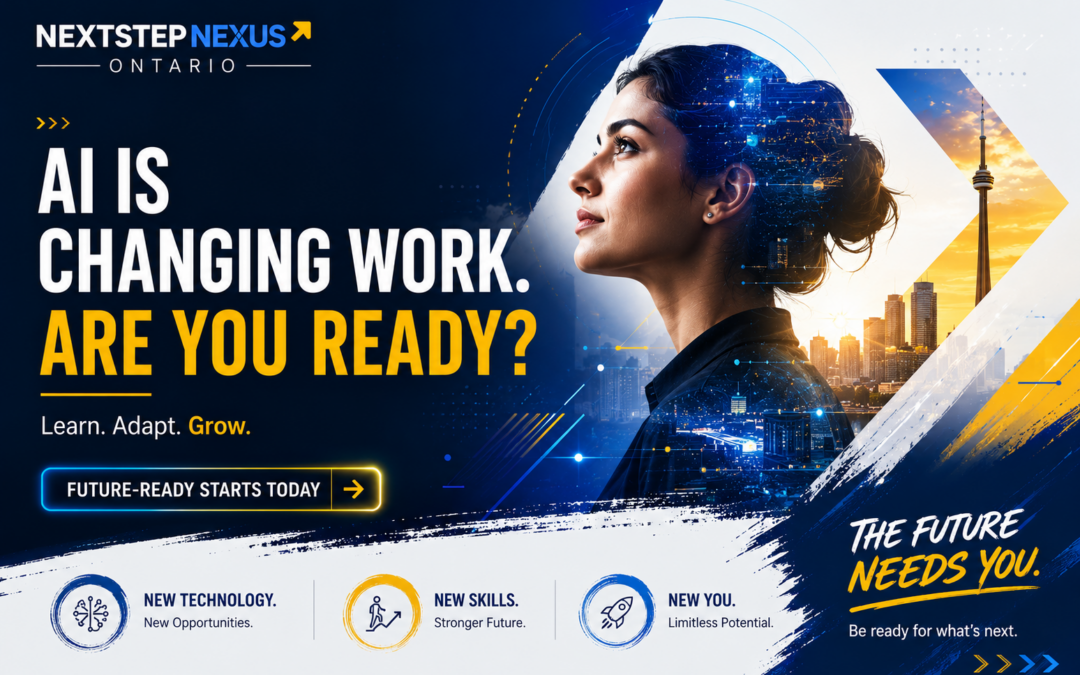
Artificial intelligence is no longer a future concept—it’s already transforming how businesses operate across Ontario and Canada.
From customer service and marketing to healthcare and finance, AI is helping organizations automate repetitive tasks, improve productivity, and make better decisions.
Many professionals worry that AI will replace jobs. The reality is more nuanced. While AI may automate certain tasks, employers are increasingly seeking individuals who know how to work alongside AI tools.
The professionals who thrive in 2026 will not be those who avoid AI. They will be those who learn how to leverage it effectively.
Is AI Replacing Jobs?
The short answer is yes—and no.
AI is reducing the need for repetitive and predictable tasks. However, it is also creating new opportunities for workers who possess skills that technology cannot easily replace.
Employers still need people who can:
- Solve complex problems
- Build relationships
- Think critically
- Lead teams
- Make strategic decisions
- Communicate effectively
AI is becoming a tool, not a replacement for human potential.
The Skills Employers Want Most in 2026
AI Literacy
Understanding how to use AI tools such as ChatGPT, Microsoft Copilot, and automation platforms is becoming a valuable workplace skill.
Critical Thinking
AI can provide information, but humans must evaluate its accuracy and make informed decisions.
Communication Skills
Strong communication remains one of the most sought-after skills across industries.
Data Literacy
Organizations rely heavily on data. Employees who can interpret information and identify trends are highly valuable.
Adaptability
Technology continues to evolve. Employers want individuals who can learn quickly and adapt to change.
How to Future-Proof Your Career
1. Learn AI Tools
Become familiar with:
- ChatGPT
- Microsoft Copilot
- Google Gemini
- AI-powered productivity tools
You don’t need to become a programmer to benefit from AI.
2. Strengthen Human Skills
Human-centered skills will continue to differentiate professionals from automation.
Focus on:
- Leadership
- Emotional intelligence
- Negotiation
- Team collaboration
3. Commit to Continuous Learning
Successful professionals view learning as an ongoing process.
Consider:
- Industry certifications
- Professional development courses
- Online learning platforms
- Employer-sponsored training
4. Build a Personal Brand
Employers increasingly search online before making hiring decisions.
Develop your professional presence through:
- Industry networking
- Thought leadership content
- Professional portfolios
5. Stay Informed About Industry Trends
Understanding how AI affects your specific industry helps you identify opportunities before others do.
Industries Most Affected by AI
Marketing
Content creation, analytics, and advertising optimization are becoming more AI-driven.
Customer Service
Chatbots and virtual assistants continue to automate basic support tasks.
Finance
AI is improving forecasting, fraud detection, and data analysis.
Healthcare
Administrative processes and patient support tools are increasingly powered by AI.
Human Resources
Recruitment, screening, and employee engagement systems are evolving through automation.
Why Ontario Workers Should Pay Attention
Ontario’s economy is rapidly embracing digital transformation.
Organizations are investing in technology while simultaneously searching for workers who can adapt to changing workplace demands.
Professionals who develop AI literacy and future-ready skills today will be better positioned for career advancement tomorrow.
Frequently Asked Questions
Will AI replace most jobs in 2026?
No. AI will automate certain tasks, but employers will continue to need people with problem-solving, communication, leadership, and decision-making skills.
What is the most important skill to learn because of AI?
AI literacy combined with critical thinking and communication skills is becoming increasingly valuable.
Do I need technical experience to use AI?
No. Many AI tools are designed for everyday professionals and require little to no technical background.
How can I prepare for the future of work?
Focus on continuous learning, digital skills, adaptability, and understanding how AI applies to your industry.
Is AI creating new jobs?
Yes. AI is generating demand for specialists in data analysis, AI implementation, digital transformation, cybersecurity, and technology management.
Final Thoughts
AI is changing the workplace, but it is also creating opportunities for professionals who are willing to adapt.
The future belongs to individuals who combine technology with human skills. By investing in continuous learning, embracing AI tools, and staying informed about workplace trends, you can remain competitive and position yourself for long-term success.
The best career strategy in 2026 is simple: Learn, adapt, and grow.